%20-%20new%20-%208-3-2026.png?width=450&height=80&name=Horizontal%20logo%20(450%20x%2080%20px)%20-%20new%20-%208-3-2026.png)

Trendz3: The Free IT & Tech Newsletter Designed Just for Small Businesses of Northwest Arkansas

Trendz3: The Free IT & Tech Newsletter Designed Just for Small Businesses of Northwest Arkansas
Note: This is a web version of our newsletter. You can subscribe here for free.
April 2026
Hi Friend,
Watching the Artemis II mission do a flyby of the moon was an out of this world reminder of what technology can accomplish when it's properly designed and executed. Technology can literally fly us beyond the moon and back.
Of course, technology — as every business knows — can also hold us back. Even on the Orion, where astronauts experienced technical difficulties with everything from sending email via Outlook (sound familiar?) to, yes, toilet trouble.
Technology — powerful, but by no means something we can just set and forget. On the Artemis II mission, or inside our businesses.
From saving on high-speed internet to guarding against voice-cloning scams to avoiding common mistakes with equipment purchases, this month our newsletter really shoots for the moon — to help your business aim higher.
Sincerely,

Rob Brothers
Founding Partner
TekTrendz

Trend1 — As prices rise, the last thing you want is to overpay for high-speed internet

Many NWA organizations purchase dedicated internet access (DIA) through a company like AT&T or Cox. Depending on, for instance, speed and location, commercial DIA can get darn expensive — anywhere from $500-1,200 per month. Here locally, we just saw a small business DIA quote for $700/mo.
With the cost of everything from RAM to SaaS now orbiting the moon, overpaying for internet is probably the last thing your business needs. So, follow these tips:
- Opt for shared business internet (think: $150-250/mo) unless your organization hosts its own server, needs a zero-downtime guarantee, belongs to a highly regulated industry, or, generally speaking, must have DIA.
- The "need for speed" may work for Maverick and Goose, but it can get costly fast in the world of commercial internet. Why purchase 5 Gbps when 1 Gpbs (or even 100 Mbps) will do? Buy only the bandwidth you need.
- Rule of thumb: 25–50 Mbps per concurrent user is usually plenty, even for heavy video-call and cloud-usage teams
- Check your gear. Companies will buy premium high-speed internet only to have it capped by slow-running routers, switches, etc. That's like putting a Ferrari engine in a Civic body. Slow hardware wastes fast internet.
- Beware pricey add-ons you may not need. Look for line items in your quote like "security suite," "static IP," and "cloud backup." Unless you're hosting your own server, you probably don't need a static IP. And don't waste money on features already being provided by your IT partner (aka us).
- In an officeplex? Consider "carpooling" your internet. That is, consider a PON (passive optical network) that lets you and your neighbors save money by having a single fiber line installed. Without loss of security or performance.
- Work directly with us, your IT partner, to avoid overpaying on internet. We'll audit your internet bill — and, where possible, suggest alternatives.
🚀 Landing the spacecraft: Don't pay too much for internet. Buy only what you need, use what you buy, and save where you can.
Trend2 — The most convincing scam ever? Thanks to AI-powered voice clones

What's more distinctive than a person's voice? Unfortunately, in the AI age, even a voice can be easily faked — and used to cheat your business out of huge sums.
Imagine how voice-cloning empowers bad actors to perpetrate highly convincing scams within your organization. "Hi, Ted. It's [insert boss's name]. I'm at the conference in Seattle and I need you to wire me $5,000 for the event fee."
Between accurate and convincing details like "Seattle trips" (easily pulled from LinkedIn), and receiving a live phone call in the boss's unique voice, who can really blame Ted if he falls for the hoax — and wires $5,000? One study out of Berkley concluded that you and I are easily duped by voice clones — often failing to accurately distinguish between the real and the fake.
🚀 Landing the spacecraft: Just because it sounds like you're talking with your kid or your boss or your banker — doesn't mean you are. Be cautious about urgent requests via phone or any other medium, and train your team to be cautious.
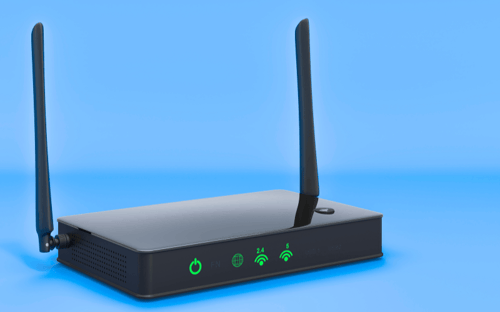
Trend3 — The market for consumer-grade routers is about to get its wires all crossed...
Small businesses in particular often operate on store-purchased, consumer-grade equipment. "Look at this router I landed on sale at Best Buy. Sweet deal!"
Of course, such sweet deals can go sour for a few reasons:
- One-off purchases may prevent parts of your network from, uh, networking. When machines don't talk to one another, it's hard to troubleshoot.
- Different brands require different patches/updates. The more brands you have, the more patching you get to manage — ugh.
- Business-grade equipment exists for a reason; businesses simply need more power, more capabilities, and stronger security
Speaking of security vulnerabilities, have you heard?
The FCC recently banned the purchase of new consumer-grade routers — brands like Netgear, TP-Link, Asus — manufactured wholly or partly overseas. Existing models already in homes or on store shelves remain legal to sell, buy, and use...with an important caveat: On March 1, these foreign-made routers will no longer receive software/firmware patches.
This means that if you purchase a new, say, Netgear router today, it will be outdated — and thus vulnerable to security threats — in less than a year. (Unless that manufacturer applies for and receives an FCC exemption.)
- Generally, stay away from consumer-grade equipment for your business
- If you must buy consumer-grade, don't purchase a foreign-made router for the next several weeks at least (the FCC should release its list of safe manufacturers by then)
- If you have a foreign-made router, be sure to update it prior to March 1
- Expect the router market to be dicey and messy for a while — think thinning inventory, supply gaps, and, yes, higher prices on U.S.-made routers
🚀 Landing the spacecraft: Use commercial equipment, and, given the regulatory environment right now, be cautious buying foreign-made routers and the like.

Quiz: Can Your Beat Our Marketer, Chris, on This I.T. Quiz for NWA Small Businesses?
There are some IT basics every small business should know.
Question is: how about you? Do you know the basics?
Let's find out. Take this quick 15-question quiz — and see if you can beat our marketer, Chris, who scored a 73%.
Not bad, Chris. Not real good, either.
Take the Quiz...and Get Bragging Rights Over Chris
%20(1).webp?width=500&height=250&name=Blog%20post%20headers%20(11)%20(1).webp)

Articles We're Reading...
Here's four articles we've read recently with important implications for small business — and their technology, productivity, and/or cybersecurity.
-
Reuters: Iran-linked hackers breach FBI director's personal email, publish photos and documents
- Techradar: Thanks, AI! RAM shortage means my favorite Mac ever is getting harder to find
- New York Post: Latest malware scam weaponizes ‘I’m not a robot’ verification tests against users
- CNBC: Anthropic limits AI rollout over fears hackers could use model for cyberattacks
Whatcha' Waitin' For? Subscribe to Trendz3 Today
Trendz³ is a free, monthly email newsletter from TekTrendz, created exclusively for small businesses of Northwest Arkansas. Once a month, the Trendz³ newsletter will provide you with a quick rundown of the three most pressing trends in technology, cybersecurity, and IT — that you really need to know. We'll also share helpful resources and news along the way.
It's the IT newsletter designed for you. Click below to sign up today. It's free.
%20(1).webp?width=2000&height=500&name=The%20facts%20about%20cyberattacks%20(8)%20(1).webp)
%20(1).webp?height=200&name=Blog%20post%20headers%20(3)%20(1).webp)